Storage
Storage interfaces let the machine read and write files using current media, making it easier to move programs between a modern computer and the C64.
A familiar machine. Fresh connections. A place for the hardware that keeps the Commodore 64 in use.
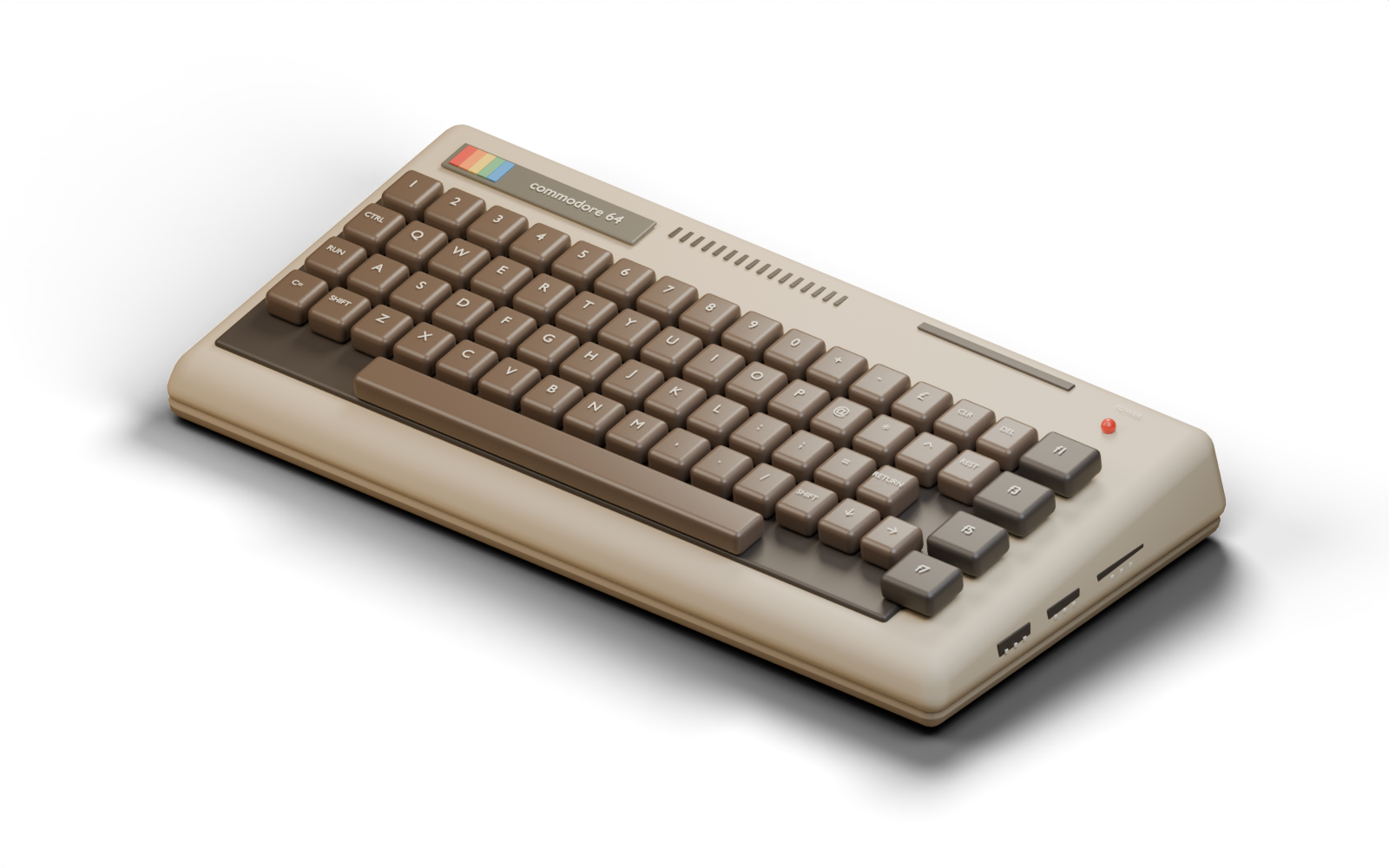
Released in 1982, the Commodore 64 is a self contained keyboard computer built around the MOS 6510 processor, with 64 KB of RAM.
VIC-II graphics and SID 6581 sound complete the machine.
New ways to work with an old favourite. Each connection opens a different part of the machine to everyday use.
Storage interfaces let the machine read and write files using current media, making it easier to move programs between a modern computer and the C64.
Video adapters help connect the machine's output to current displays, translating the signal so its picture can be viewed on a modern screen.
Sound hardware supports listening, recording and audio connections, bringing the machine's sound into a present day setup.
Network and connection interfaces provide routes for transferring files and exchanging data with other computers.
Input adapters connect alternative controllers and keyboards, giving familiar controls a place alongside the original machine.
A few pieces from the bench, described simply by what they do.
Connects ATA storage to the C64 through its IEC serial bus, from the Arananet workshop.
Tape emulation for the C64, playing TAP images where a datasette would normally be used.
Printed circuit board interfaces for the Amiga and the Commodore 64, designed and built under the Arananet name.
Ageing electrolytic capacitors should be checked and replaced where needed.
The original power supply can fail and damage the machine; have it tested before use.
Clean the case, keyboard and contacts gently, using methods appropriate to each material.